

Ice Dams 101: Why They Form & How to Stop Them Before They Wreck Your Roof
By: Victors Home Solutions
Ice Dams 101: Why They Form & How to Stop Them Before They Wreck Your Roof
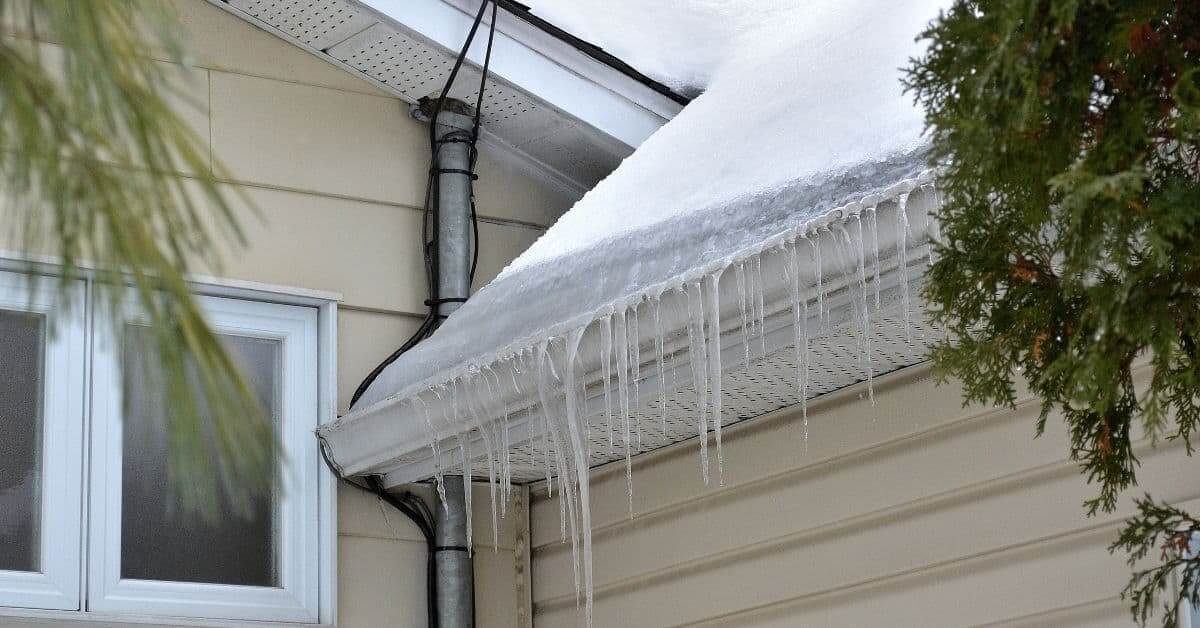
Every winter, homeowners in the Midwest gaze up at their roofs and see thick ridges of ice hanging from the eaves. While icicles might look picturesque, that heavy ridge of ice is a silent roof killer known as an ice dam.
If left unchecked, ice dams can tear off gutters, loosen shingles, and back up water into your home, causing massive interior leaks and mold growth. In fact, we’ve seen how ice and snow wreck roofs firsthand, often leading to emergency repairs that could have been avoided.
This guide will explain exactly why ice dams form, how to remove them safely, and—most importantly—how to prevent them permanently.
What Is an Ice Dam?
An ice dam is a ridge of ice that forms at the edge of a roof and prevents melting snow (water) from draining off the roof. The water that backs up behind the dam can leak into a home and cause damage to walls, ceilings, insulation, and other areas.
The Danger Zone:
- Torn Gutters: The sheer weight of the ice can rip gutters right off the fascia.
- Interior Leaks: Water pools behind the dam and seeps under the shingles, dripping into your attic and down your walls.
- Mold Growth: As we’ve discussed in our guide on how leaks cause mold [blocked], moisture trapped in your attic is a recipe for toxic mold.
The Science: Why Do Ice Dams Form?
Many homeowners blame the weather, but the real culprit is usually inside your house. Ice dams are caused by heat loss.
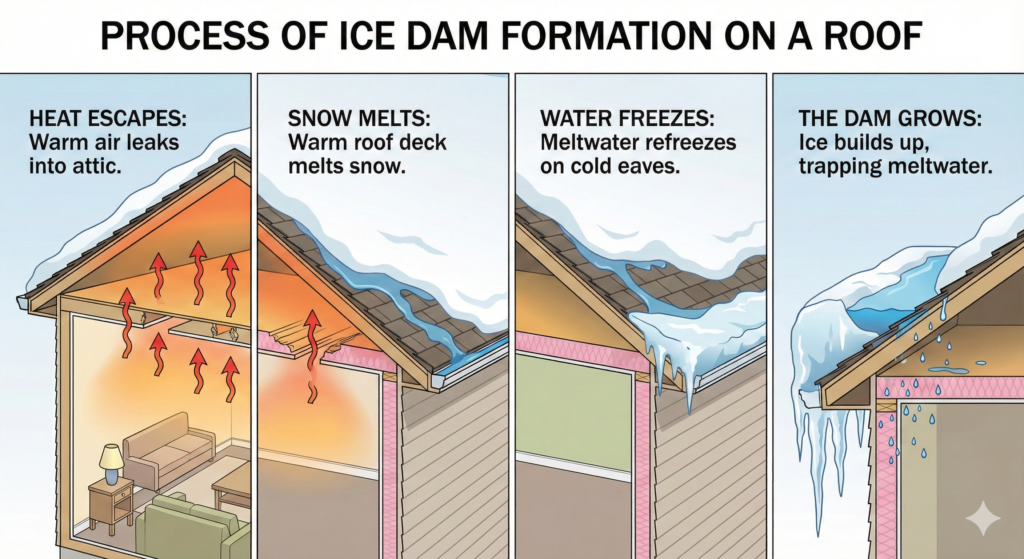
Here is the cycle:
- Heat Escapes: Warm air from your living space leaks into the attic because of poor insulation or air leaks.
- Snow Melts: This warm air heats the roof deck, melting the snow on the upper parts of your roof.
- Water Freezes: The melted snow runs down to the eaves (the edges of the roof). Since the eaves overhang the house, they aren’t warmed by the attic air. The water hits this cold surface and refreezes.
- The Dam Grows: Over time, this ice builds up, creating a wall that traps future meltwater.
The Permanent Fix: Insulation and Ventilation
You can hack away at the ice every year, or you can solve the root problem. To prevent ice dams, you must keep your roof deck cold. That sounds counter-intuitive, but a “cold roof” is a healthy roof in winter.
1. Upgrade Your Attic Insulation
If your attic floor isn’t properly sealed and insulated, you are paying to heat the outdoors. High-quality attic insulation acts as a thermal barrier, keeping the heat in your living rooms and out of your attic.
- Check your depth: If you can see the floor joists in your attic, you likely don’t have enough insulation.
- Seal the gaps: Air sealing prevents warm air from bypassing the insulation through light fixtures and plumbing stacks.
2. Ensure Proper Ventilation
Ventilation works hand-in-hand with insulation. Intake vents (at the soffits) and exhaust vents (at the ridge) create a continuous flow of cold outside air through the attic. This flushes out any heat that does escape, ensuring the roof deck stays cold enough to prevent snow from melting unevenly.
Learn more about our Blown-In Insulation services to see how we tackle this two-part system.
How to Remove Ice Dams Safely (And What NOT to Do)
If you already have an ice dam, you need to address it before it causes a leak. However, many DIY methods are dangerous for both you and your roof.
❌ The “Don’ts”
- Do NOT use an axe or pick: Striking the ice often leads to striking the shingles, puncturing your roof and voiding your warranty.
- Do NOT use salt pucks: Rock salt can damage your shingles and kill the grass/plants below when it drains off.
✅ The “Dos”
- Use a Roof Rake: If you can reach the roof safely from the ground, use a long-handled roof rake to pull snow off the edges before it melts.
- Steam Removal: For established dams, hire a professional who uses steam. Steam cuts through the ice without damaging the roofing materials.
- Install Ice and Water Shield: If you are getting a roof replacement, ensure your contractor installs a high-quality Ice and Water Shield [blocked]. This waterproof membrane adheres to the deck and seals around nails, preventing leaks even if a dam forms.
Stop the Freeze this Winter
Don’t wait for water to start dripping through your ceiling. If you notice large icicles forming or uneven snow melt on your roof, it’s time to look at your attic.
At Victors Home Solutions, we don’t just replace roofs; we optimize your home’s entire protective system.