

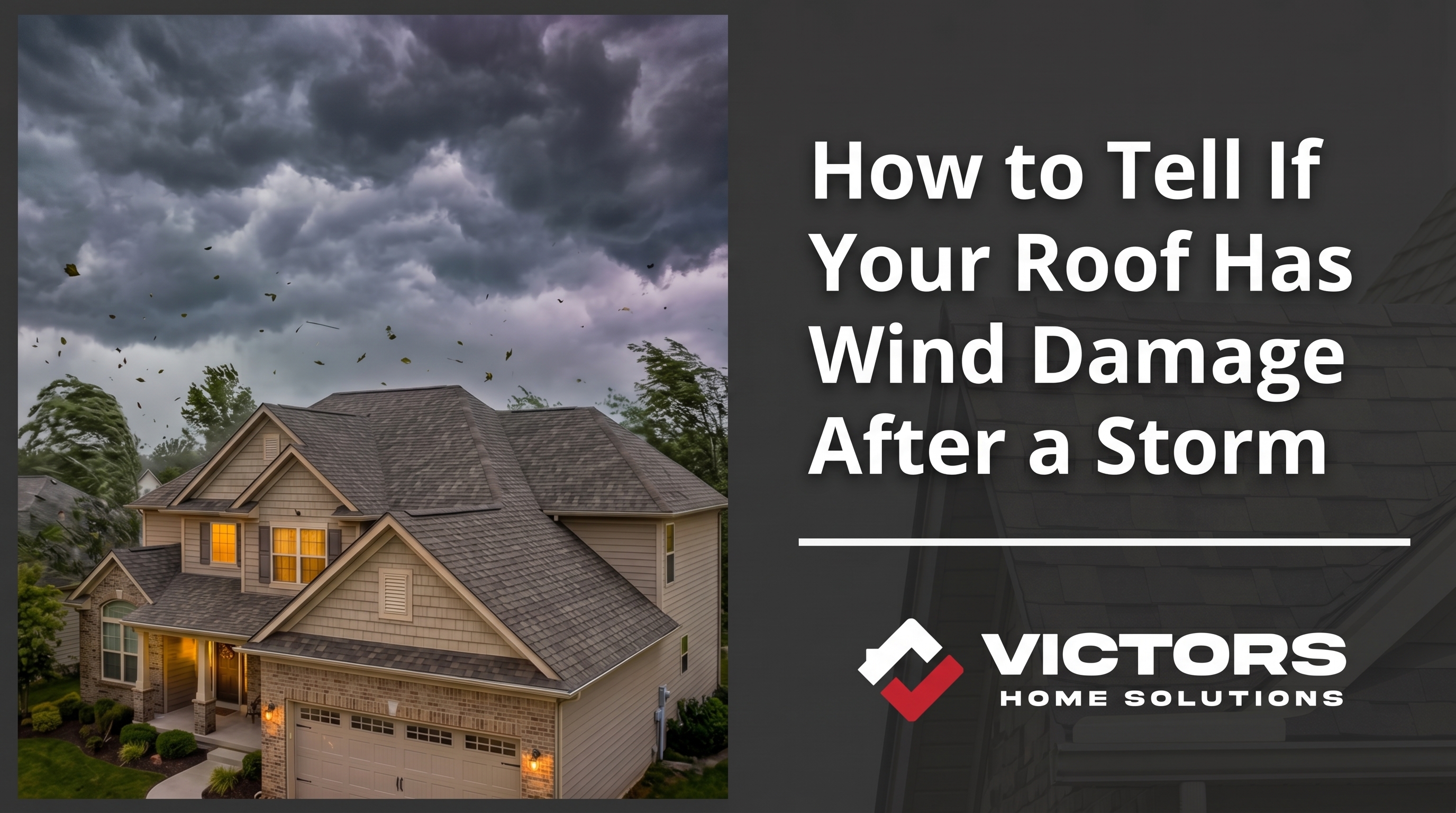
How to Tell If Your Roof Has Wind Damage After a Storm
By: Victors Home Solutions
Don’t let a hidden leak become a major repair. Learn the key signs of roof wind damage and how we can help you protect your home.
A major storm can be a stressful experience for any homeowner. Once the winds die down and the clouds clear, your first instinct is likely to check for damage. While some signs are obvious, like a fallen tree limb, roof wind damage is often subtle and can lead to costly structural issues if left unaddressed.
At Victors Home Solutions, we believe your home should be your sanctuary. Our mission is to enhance your comfort and safety through expert craftsmanship and reliable service. In this guide, we’ll show you exactly how to spot the signs of a storm-damaged roof and what steps you should take next.
Common Signs of Roof Wind Damage to Look For
High winds don’t just blow things over; they create suction and pressure that can compromise your roof’s integrity. Here are the most frequent signs of storm damage to your roof that you can spot from the ground:
1. Missing or Blown-Off Shingles
The most visible sign of roof storm damage is seeing shingles scattered in your yard or down the street. High-velocity winds can catch the edge of a shingle and peel it away entirely, leaving your roof’s underlayment exposed to the elements.
2. Curled, Cracked, or Lifted Shingles
Sometimes the damage isn’t what’s missing, but what’s moved. If you notice wind damaged shingles that look “ruffled” or lifted, the sealant bond has likely been broken. Even if the shingle settles back down, it is no longer watertight and is prone to leaking during the next rainfall.
3. Granule Loss and Gutter Accumulation
Check your gutters and downspouts. If you see an excessive amount of “sand” or granules, your shingles have suffered granule loss. This “bruising” occurs when shingles flap against each other in high winds, stripping away the protective outer layer that shields your home from UV rays and water.
4. Damaged Flashing, Soffit, and Fascia
Wind doesn’t just hit the shingles. It often attacks the “edges” of your roof. Look for bent or missing flashing around chimneys and vents, or damage to the soffit and fascia along the roofline. These components are critical for keeping pests and moisture out of your attic.
How to Safely Inspect Your Roof After a Storm
Your safety is our priority. You don’t need to climb a ladder to perform an initial storm damage roof inspection. We recommend a “ground-up” approach:
- Walk the Perimeter: Walk around your entire home and look for debris or shingles in the grass.
- Use Binoculars: A pair of binoculars can help you see lifted shingles or damaged flashing on higher peaks without leaving the ground.
- Check the Attic: Look for water stains on the ceiling, damp insulation, or light peeking through the roof boards.
- Check the Gutters: As mentioned, look for heavy granule accumulation.
Your Build Partner: Moving Forward After Your Claim is Approved
At Victors Home Solutions, we operate differently than traditional “storm chasers.” We do not provide estimates for the purpose of filing a claim or negotiating with insurance adjusters.
Instead, we serve as the expert team that brings your project to life once your insurance company has approved the damage and released the funds.
Why Choose Victors as Your Restoration Partner?
Once you have your insurance settlement in hand, you need a contractor who prioritizes quality over speed. We provide a professional damage assessment to plan your build, ensuring that every dollar of your insurance check is used to enhance the value and safety of your home.
Ready to Restore Your Home?
If you have already received your insurance approval and are looking for a trusted team to perform the work, we are ready to help. We don’t just “fix” roofs—we build long-term solutions with expert craftsmanship.
At Victors Home Solutions, we focus on the final result: a beautiful, durable home. Let’s get to work.
Get a Free Roofing Inspection
"*" indicates required fields